Sustainability, Ethics, and Internationalization: Pathways to Responsible Global Scholarship
DOI:
https://doi.org/10.48017/dj.v11iSpecial_1.3969Abstract
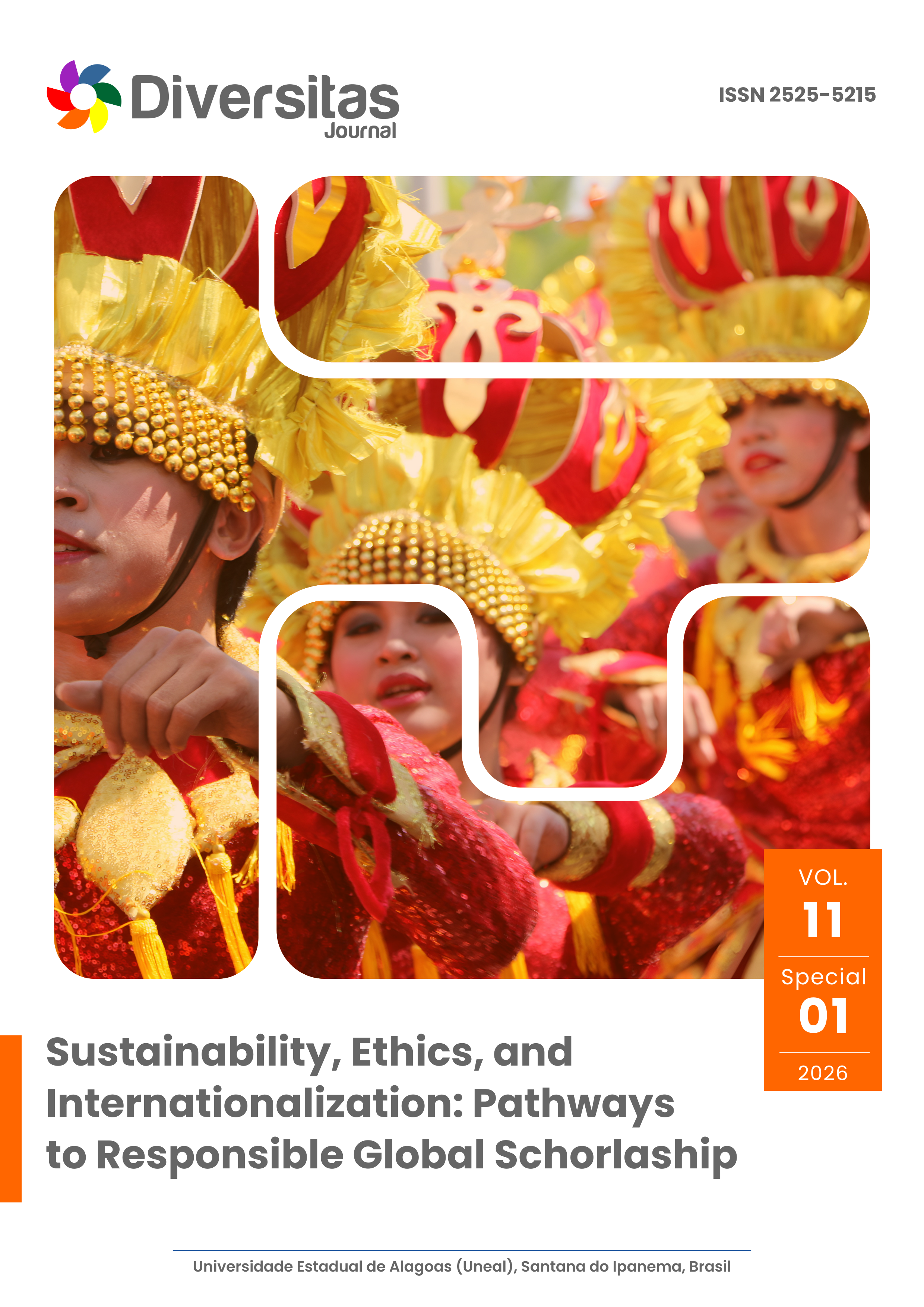
In an era marked by environmental uncertainty, technological disruption, and increasing global interconnectedness, the role of higher education institutions in shaping responsible and transformative knowledge has become more critical than ever. Universities are no longer merely centers of knowledge production; they have evolved into key actors in addressing complex global challenges through research, innovation, and community engagement (Altbach & Knight, 2007; UNESCO, 2021). Within this context, the integration of sustainability, ethical governance, and international collaboration has emerged as an essential foundation for responsible global scholarship.
References
Altbach, P. G., & Knight, J. (2007). The internationalization of higher education: Motivations and realities. Journal of Studies in International Education, 11(3–4), 290–305. https://doi.org/10.1177/1028315307303542
Brundiers, K., Wiek, A., & Redman, C. L. (2010). Real-world learning opportunities in sustainability: From classroom into the real world. International Journal of Sustainability in Higher Education, 11(4), 308–324. https://doi.org/10.1108/14676371011077540
Floridi, L., Cowls, J., Beltrametti, M., Chatila, R., Chazerand, P., Dignum, V., … Vayena, E. (2018). AI4People—An ethical framework for a good AI society. Minds and Machines, 28(4), 689–707. https://doi.org/10.1007/s11023-018-9482-5
Hawkes, J. (2001). The Fourth Pillar of Sustainability: Culture’s Essential Role in Public Planning. Melbourne: Cultural Development Network. https://www.culturaldevelopment.net.au/community/Downloads/HawkesJon(2001)TheFourthPillarOfSustainability.pdf
Leal Filho, W., Shiel, C., Paço, A., Mifsud, M., Ávila, L., Brandli, L., ... Caeiro, S. (2019). Sustainable development goals and sustainability teaching at universities: Falling behind or getting ahead of the pack? Journal of Cleaner Production, 232, 285–294. https://doi.org/10.1016/j.jclepro.2019.05.309
UNESCO. (2021). Reimagining our futures together: A new social contract for education. Paris: UNESCO. https://unesdoc.unesco.org/ark:/48223/pf0000379381
United Nations. (2015). Transforming our world: The 2030 Agenda for Sustainable Development. New York: United Nations. https://sdgs.un.org/2030agenda
Downloads
Published
How to Cite
Issue
Section
License
Copyright (c) 2026 Angelito Bautista Jr

This work is licensed under a Creative Commons Attribution 4.0 International License.
The Diversitas Journal expresses that the articles are the sole responsibility of the Authors, who are familiar with Brazilian and international legislation.
Articles are peer-reviewed and care should be taken to warn of the possible incidence of plagiarism. However, plagiarism is an indisputable action by the authors.
The violation of copyright is a crime, provided for in article 184 of the Brazilian Penal Code: “Art. 184 Violating copyright and related rights: Penalty - detention, from 3 (three) months to 1 (one) year, or fine. § 1 If the violation consists of total or partial reproduction, for the purpose of direct or indirect profit, by any means or process, of intellectual work, interpretation, performance or phonogram, without the express authorization of the author, the performer, the producer , as the case may be, or whoever represents them: Penalty - imprisonment, from 2 (two) to 4 (four) years, and a fine. ”